How Much Does Concrete Contractor Insurance Cost and How Can You Lower It?
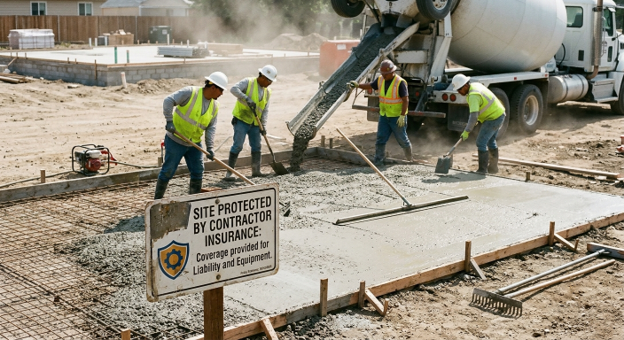
A single cracked driveway can cost a crew a week of work and a client’s trust. Good concrete contractor insurance keeps one bad pour from turning into a money problem that lingers for years. Still, the first question most owners ask is simple. What will it cost us?
We cover the main price drivers below. We also share realistic ranges and show how to trim the bill without leaving gaps.
What Shapes Your Premium
Insurers price risk. A few details carry the most weight, and knowing them puts you in a stronger spot when quotes arrive.
Payroll and Crew Size
More workers and higher payroll mean a higher premium. Payroll is the base for most workers’ comp calculations, so accurate numbers matter.
Type of Work
Flatwork on a backyard patio carries less risk than pumping, structural pours or cutting near traffic. Each job type is rated differently.
Location
Rates change from state to state. Medical costs, local laws and claim trends all play a part. A crew in California may see a different price than a crew in Texas, even with the same payroll.
Claims History
A clean record earns better offers. Frequent claims, even small ones, signal higher risk to a carrier.
Limits and Deductibles
Higher limits cost more. A higher deductible lowers the premium but raises what you pay when something goes wrong.

Typical Cost Ranges
These figures are broad estimates only. Real quotes depend on the carrier, the state and your job mix.
- General liability: often $1,500 to $6,000 a year for small and mid-size firms.
- Workers’ compensation: priced per $100 of payroll. Concrete work sits in a higher-risk class so that a small crew can pay several thousand dollars a year, and larger crews can reach five figures.
- Commercial auto: frequently $1,500 to $4,000 or more per vehicle each year.
- Tools and equipment coverage: usually a few hundred to a couple of thousand dollars.
A package that combines several lines can sometimes cost less than buying each one alone. An agent can tell you whether that applies to your business.
Why Workers’ Compensation for Concrete Contractors Costs So Much
The job is physical. Crews lift heavy forms, kneel on wet slabs and work around machines all day. Wet cement can burn skin, and a slip on a fresh pour is rarely minor.
Workers compensation for concrete contractors pays medical bills and lost wages after a job injury. Most states require it once you hire employees. The premium usually follows this path:
- Payroll is divided by 100.
- The result is multiplied by the class rate.
- An experience modifier then raises or lowers the total, based on your past claims.
That last step is where good habits pay off. Fewer injuries lead to a lower modifier, and a lower modifier leads to a lower bill.
Commercial Auto Insurance for Contractors
Trucks haul mixers, forms, rebar and tools every day. A personal policy generally excludes business use, so a crash on the way to a job site could leave you exposed.
Commercial auto insurance for contractors covers vehicles used for work. It can protect against accident liability, vehicle damage and injuries to others.
Insurers look at:
- Vehicle type and weight
- Driver ages and records
- Daily travel distance
- Where the vehicles are parked overnight
Small details count here. A driver with two recent tickets can raise the price for the whole fleet.
Seven Ways to Lower Your Cost
Savings come from steady habits, not from dropping protection you may need later.
- Compare several quotes. Carriers weigh risk differently. An independent agent can shop your file across many companies at once.
- Keep payroll records clean. Classify each worker correctly. Misclassification can lead to audit charges and surprise bills.
- Build a written safety plan. Cover protective gear, trench rules, lifting methods and daily site checks. Insurers notice documented training.
- Screen your drivers: Review motor vehicle records before hiring. Set clear rules for phone use and speed.
- Choose deductibles with care: A higher deductible can reduce your premium. Keep enough cash set aside to cover it.
- Bundle where it makes sense: Placing several policies with one carrier can earn a multi-policy discount.
- Review coverage every year: Payroll, equipment and job types change. A policy that fit last year may be too large or too small now.
A return-to-work program also helps. Offering light duty after an injury can shorten claims and keep costs down.
Protecting Equipment on and off the Job Site
Mixers, trowels, saws, screeds and power tools add up fast. Theft from a locked trailer or damage during transport can cost thousands, and general liability does not pay for your own gear. Inland marine coverage, often called equipment or tools coverage, fills that gap. It can protect owned and rented items while they sit in storage, travel between sites or stay overnight at a job. A full equipment list with serial numbers and purchase values makes a claim smoother. It also keeps your concrete contractor insurance program accurate as your fleet grows.
Certificates of Insurance and Contract Requirements
General contractors and property owners rarely hire a crew without proof of coverage. They usually ask for a certificate of insurance before work starts, and many contracts set minimum limits for liability and workers’ comp. Some also require additional insured status or a waiver of subrogation. Missing a requirement can delay a start date or cost you the bid. We recommend asking for contract terms early, then sharing them with your agent so each policy matches the paperwork. Prompt certificates also show clients that your business is organized and reliable.
Conclusion
The cost of protecting a concrete business depends on payroll, job type, location and claims history. Strong safety habits, careful records and regular comparisons can bring those numbers down over time.
At Covered By Us, we compare options from multiple carriers and build a plan around how your crew actually works. If you would like a clear, tailored quote, our team is ready to help.
Frequently Asked Questions
How much does concrete contractor insurance cost for a small business?
Costs vary by payroll, services, state and claims record. Many small firms pay a few thousand dollars a year for general liability alone. Adding workers’ comp and vehicle coverage raises the total. A written quote is the only reliable figure.
Is workers’ compensation for concrete contractors required by law?
In most states, yes, once you have employees. Rules differ on how many workers trigger the requirement and whether owners can be excluded. Check your state’s labor department or ask a licensed agent.
Does my personal auto policy cover my work truck?
Usually not. Personal policies often exclude vehicles used for business. Commercial auto insurance for contractors is designed for trucks that carry tools, materials and crew members.
Can a safety program really lower my premium?
It can. Fewer injuries improve your experience modifier, which directly affects workers’ comp pricing. Some carriers also offer credits for documented training and site inspections.