What Insurance Do You Need to Open a Beauty Salon? Insurance Before Starting a Job?
A client slips on a wet floor near the shampoo bowl. Nobody planned for it. Nobody ever does. New owners tend to spend their early weeks on paint colors, chairs, and booking software, while the paperwork waits in a folder. We think that order should change. The right beauty salon insurance protects the business you are building from one bad afternoon. Below, we explain what to carry and when to get it.
Why Coverage Comes Before the First Client
A salon looks calm from the outside. Inside, it has hot tools, chemicals, wet floors, sharp blades, and people sitting very still while you work near their eyes and skin. Accidents are rare, but they are real.
One claim can cost more than a full year of profit. A good policy keeps that bill from landing on your personal savings. That is the plain reason salon insurance matters.
Do You Need Insurance Before Starting a Job?
Yes. Put coverage in place before the first appointment, not after the grand opening photos.
Here is why the timing matters:
- Claims can happen on day one. A burn or an allergic reaction does not wait for a salon to settle in.
- Landlords often require proof. Many commercial leases ask for a certificate of insurance before you receive keys.
- Lenders and vendors may ask too. Equipment financing often comes with the same request.
- Coverage rarely goes backward. A policy usually will not respond to something that happened before it started.
The same rule applies to stylists who rent a booth or chair. Even an independent professional working inside someone else’s space should hold a policy of their own. The salon owner’s coverage may not extend to a renter.
The Core Policies for a New Salon
Most owners build their protection from a few main pieces. Some are sold together, which often saves money.
General Liability Insurance
This is the base layer. It covers injuries and property damage that happen on your premises and are not caused by a service itself. A customer trips over a power cord. A visitor hurts a wrist on a loose door. The policy can pay medical costs and legal fees.
Professional Liability Insurance for Salons
Services go wrong sometimes, even with skilled hands. Professional liability insurance for salons responds when a client says your work caused harm. Think of a chemical burn after a color treatment, hair loss from a relaxer, or a skin reaction to a facial product.
General liability usually does not cover these claims. That gap surprises many owners, so we point it out early. Some insurers call this coverage malpractice or errors and omissions. The label changes, but the purpose stays the same.
Commercial Property Insurance
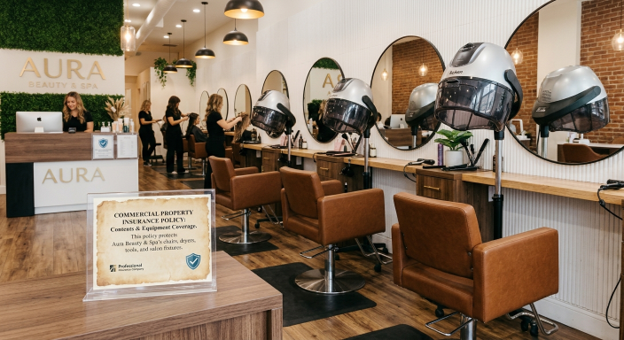
Your chairs, dryers, mirrors, tools, and retail stock have real value. Commercial property coverage helps repair or replace them after fire, theft, or certain types of water damage. If you lease the space, ask what the landlord’s policy already handles. Then insure what remains yours.
Workers’ Compensation Insurance
Once you hire an employee, most states require this coverage. It pays medical bills and part of lost wages when a team member is hurt on the job. Salon work brings repetitive strain, chemical exposure, and slips, so the risk is not theoretical. Rules differ by state, so confirm yours before the first payroll.
Business Owner’s Policy
A business owner’s policy, often called a BOP, bundles general liability and property coverage into one package. Small salons often find it simpler to manage than separate policies. It may also include lost income protection if a covered event forces you to close for a while.
Extra Coverage Worth a Look
Not every salon needs everything. These add-ons fit certain situations:
- Cyber liability: Useful if you store client names, phone numbers, and card details in booking software.
- Business interruption: Replaces income when a covered loss shuts your doors.
- Product liability: Matters if you sell retail items or make your own blends.
- Commercial auto: Applies if you travel to clients or use a business vehicle for supplies.
What Shapes Hair Salon Insurance Cost?
Owners ask about hair salon insurance cost more than almost anything else. No single number fits every shop, because insurers look at several details.
- Services offered: Chemical treatments and waxing carry different risks than basic cuts.
- Number of stylists and staff: More people usually means more exposure.
- Location and building type: Rent, age of the building, and local claim history all play a part.
- Coverage limits and deductibles: Higher limits raise the premium, while a larger deductible can lower it.
- Claims history: A clean record helps.
- Annual revenue: Busier shops tend to carry higher premiums.
A fair estimate comes only from real details about your salon. Generic online averages can mislead.
Practical Tips for Choosing a Policy
Good coverage is about fit, not volume. These steps help:
- List every service you plan to offer before you ask for a quote.
- Request a certificate of insurance early if your lease demands one.
- Ask whether the policy covers treatments done off-site, such as weddings or events.
- Check whether stylists who rent chairs need their own policies.
- Review limits each year, because a growing salon outgrows old numbers.
- Keep training records and written client consent forms. Insurers notice careful habits.
- Compare more than one carrier, since appetite for salon risks varies.
Mistakes New Owners Often Make
A few errors repeat across the industry:
- Buying only general liability and assuming it covers service errors.
- Choosing the cheapest premium without reading the exclusions.
- Forgetting to update the policy after adding new services.
- Treating independent stylists as employees, or the reverse, without checking how the policy sees them.
Each of these is easy to avoid with a short conversation before the policy starts.
Conclusion
Opening a salon takes courage, skill, and a fair amount of planning. Insurance belongs in that plan from the start. A solid mix of general liability, professional liability, property, and workers’ compensation covers the main risks most owners face. Add the extras that match your services, and review everything once a year.
At Covered By Us, we compare options from multiple carriers and shape coverage around how your salon actually works. When you are ready to talk numbers, our team can walk through your services, your space, and your budget, then suggest a package that makes sense. Reach us at 909-278-7053 to start a quote.
FAQs
1. What is the main type of beauty salon insurance a new owner should buy first?
General liability is the usual starting point because it covers customer injuries and property damage on your premises. Most owners then add professional liability, since service-related claims fall outside the first policy.
2. Is professional liability insurance for salons different from general liability?
Yes. General liability responds to accidents at your location. Professional liability responds to claims that a treatment or service caused harm, such as a burn, a reaction, or damaged hair.
3. How much does hair salon insurance cost?
The cost depends on your services, staff size, location, coverage limits, and claims history. A quote based on your own details gives the most accurate answer.
4. Do booth renters need their own salon insurance?
In most cases, yes. A salon owner’s policy often does not extend to independent stylists who rent space, so they should carry personal coverage.